
Outdoor Living Done Well: Designing Spaces That Flow From Inside to Out
As summer settles in, our homes begin to stretch outward.
Doors stay open longer. Evenings drift into the garden. A morning coffee moves from the kitchen to the terrace without much thought. Outdoor spaces become part of everyday life. And yet, this is often the moment when many homeowners realise something feels slightly unfinished. The interior of the home may feel calm and considered, but outside, the space can feel disconnected. Furniture that doesn’t quite fit the setting. Areas that look pleasant, but aren’t particularly inviting to stay in.
The issue is rarely the garden itself.
More often, it’s that the outdoor space was never designed with the same intention as the rooms inside.
When outdoor spaces feel separate
Many homes treat the garden, terrace, or balcony as a secondary space. Furniture is chosen quickly. Layouts are improvised. Materials don’t relate to what’s happening indoors.
The result is a subtle disconnect.
Stepping outside can feel like leaving the home entirely, rather than moving naturally through it. But when outdoor areas are designed with the same thoughtfulness as the interior, something different happens. The home begins to feel larger. More fluid. More complete.
Designing with continuity in mind
The most successful outdoor spaces rarely feel styled or overly decorative. Instead, they feel like a natural continuation of the interior. This doesn’t mean replicating the living room outside, but it does mean thinking about the relationship between the two.
How materials transition.
How furniture is scaled.
How light carries through the space.
These details shape how the outdoor area is experienced.
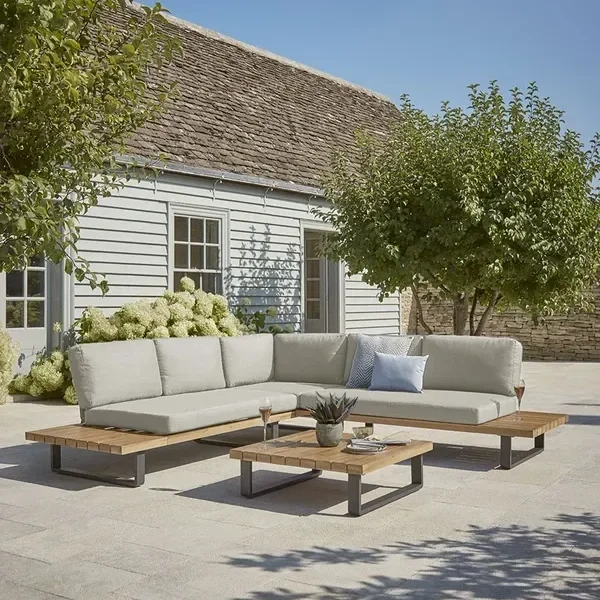
Photo credit - Cox & Cox
Where to begin
1. Consider the transition between inside and out
The threshold between interior and exterior is more important than it might seem. When materials, tones, or textures relate to one another, the transition feels effortless.
This could be as simple as:
Repeating a material from inside the home outdoors
Choosing furniture finishes that echo interior tones
Aligning colour palettes between the two spaces
The goal is cohesion rather than contrast.
2. Think carefully about furniture scale
Outdoor furniture is often chosen as a standalone purchase rather than as part of the overall design. But scale matters just as much outdoors as it does inside. A terrace with furniture that is too small can feel temporary. Pieces that are too large can overwhelm the space.
Instead, treat the outdoor seating area as you would a living room, considering proportion, layout, and how people will actually gather. Comfort is what encourages people to stay.
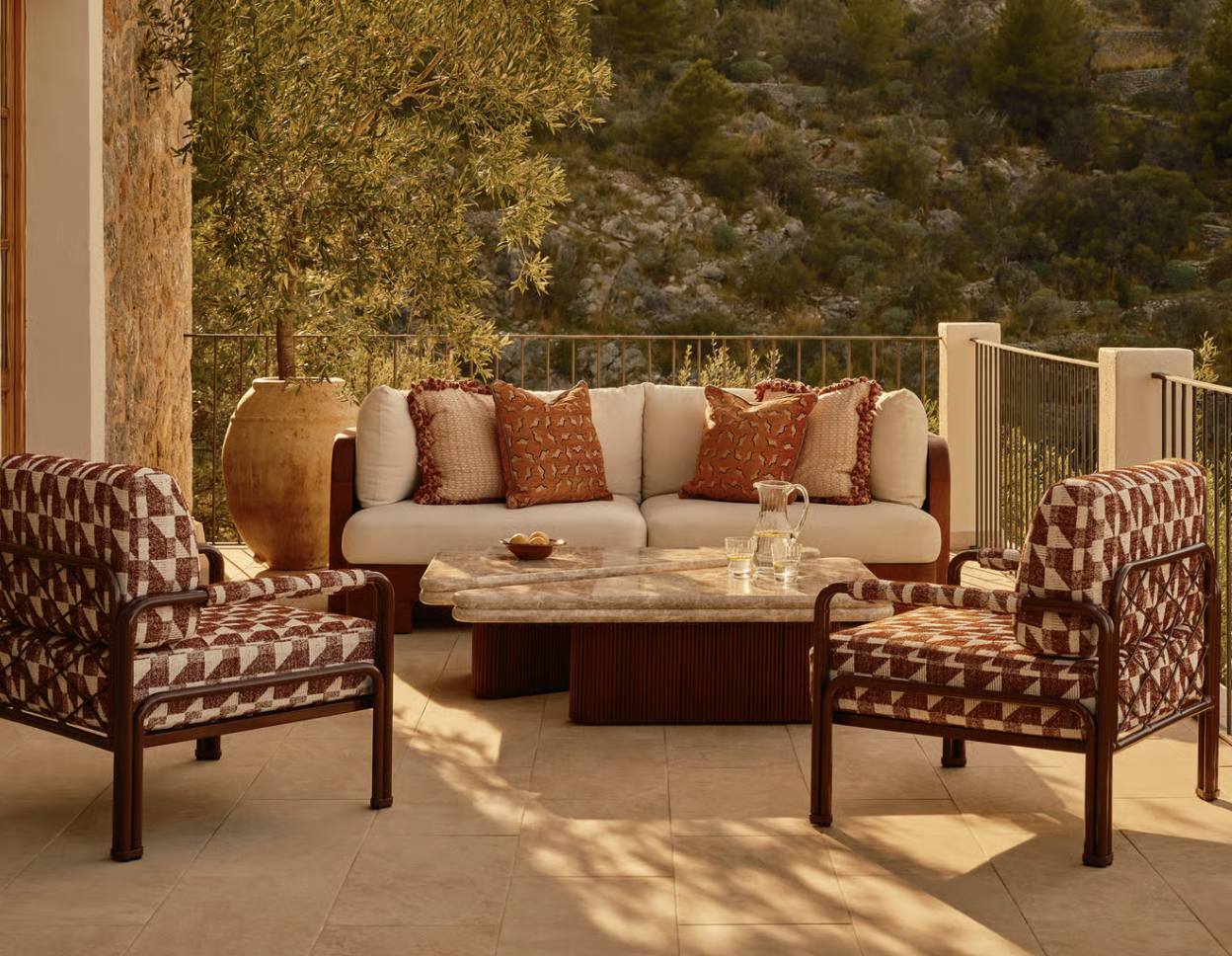
Photo credit - Soho Home
3. Create zones for living
Outdoor spaces work best when they support different moments of the day.
A place to sit with coffee in the morning.
A comfortable area for conversation in the evening.
A dining space that feels relaxed rather than formal.
These zones don’t need rigid boundaries, but they do benefit from subtle cues such as rugs, lighting, or furniture placement.
4. Use lighting to extend the evening
Lighting is one of the most overlooked elements of outdoor design. A single overhead fixture rarely creates the atmosphere people hope for.
Instead, layered lighting, lanterns, wall lights, soft table lamps, or low garden lighting, allows the space to remain inviting as daylight fades. Good lighting doesn’t draw attention to itself. It simply makes the space feel welcoming.
5. Choose materials that age well
Outdoor environments naturally change with time.
Materials that weather gracefully, stone, teak, metal, woven textures, often feel more considered than pieces that try to resist the elements entirely. Over time, these surfaces gain character rather than losing appeal.
And that quiet patina often contributes to the atmosphere of the space.
A space that feels complete
Outdoor areas are often where some of the most memorable moments happen, long dinners, relaxed evenings, unplanned conversations that stretch later than expected. When these spaces are considered with the same care as the interior, they stop feeling secondary. They become part of the home itself.
And that quiet sense of continuity, where every space feels intentional, is often what makes a home feel truly complete.
